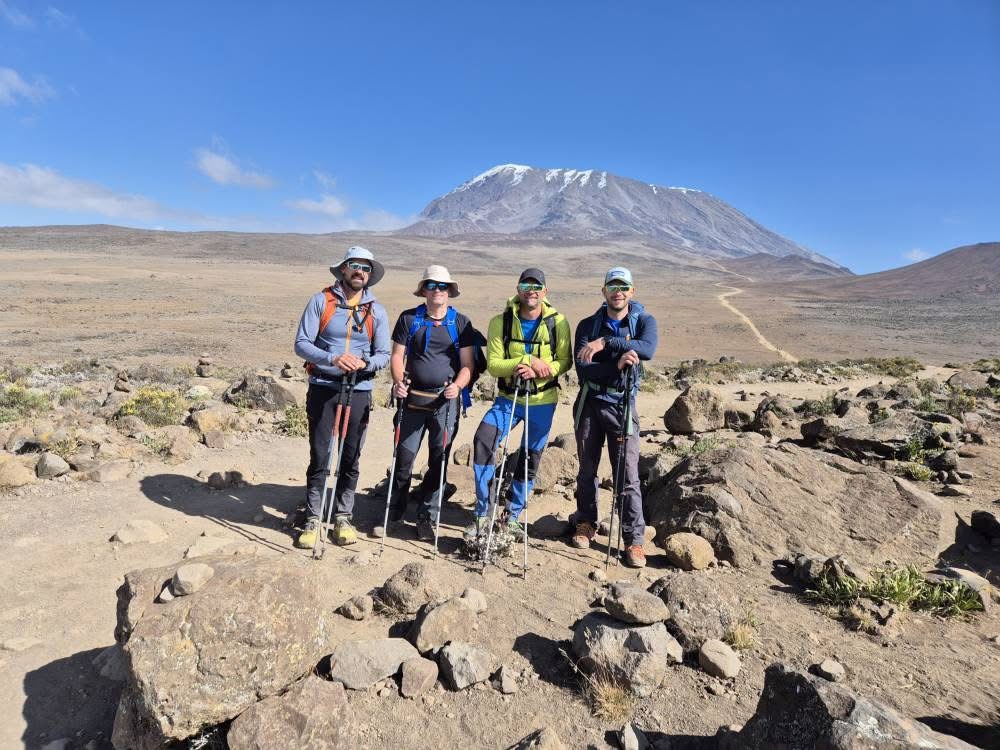
Kilimanjaro is not just a mountain; it's a monumental natural landmark that captivates the imagination. As Africa's highest peak and the world's tallest free-standing mountain, it stands alone in majestic splendor, rising from the plains of northeastern Tanzania near the border with Kenya.
Kilimanjaro is a dormant stratovolcano comprised of three distinct volcanic cones:
Kibo: The youngest and highest of the three, Kibo is a dormant volcano and home to Uhuru Peak, the mountain's summit at 5,895 meters (19,341 feet).
Mawenzi: At 5,149 meters (16,893 feet), Mawenzi is an older, more eroded peak with a jagged, precipitous form, a testament to its long-extinct volcanic past.
Shira: The oldest of the cones, Shira is now a collapsed caldera that forms a stunning plateau at around 4,005 meters (13,140 feet), offering incredible vistas.
While Mawenzi and Shira are considered extinct, Kibo is dormant and could potentially erupt again, though its last major eruption occurred over 350,000 years ago.
Kibo: The youngest and highest of the three, Kibo is a dormant volcano and home to Uhuru Peak, the mountain's summit at 5,895 meters (19,341 feet).
Mawenzi: At 5,149 meters (16,893 feet), Mawenzi is an older, more eroded peak with a jagged, precipitous form, a testament to its long-extinct volcanic past.
Shira: The oldest of the cones, Shira is now a collapsed caldera that forms a stunning plateau at around 4,005 meters (13,140 feet), offering incredible vistas.
While Mawenzi and Shira are considered extinct, Kibo is dormant and could potentially erupt again, though its last major eruption occurred over 350,000 years ago.